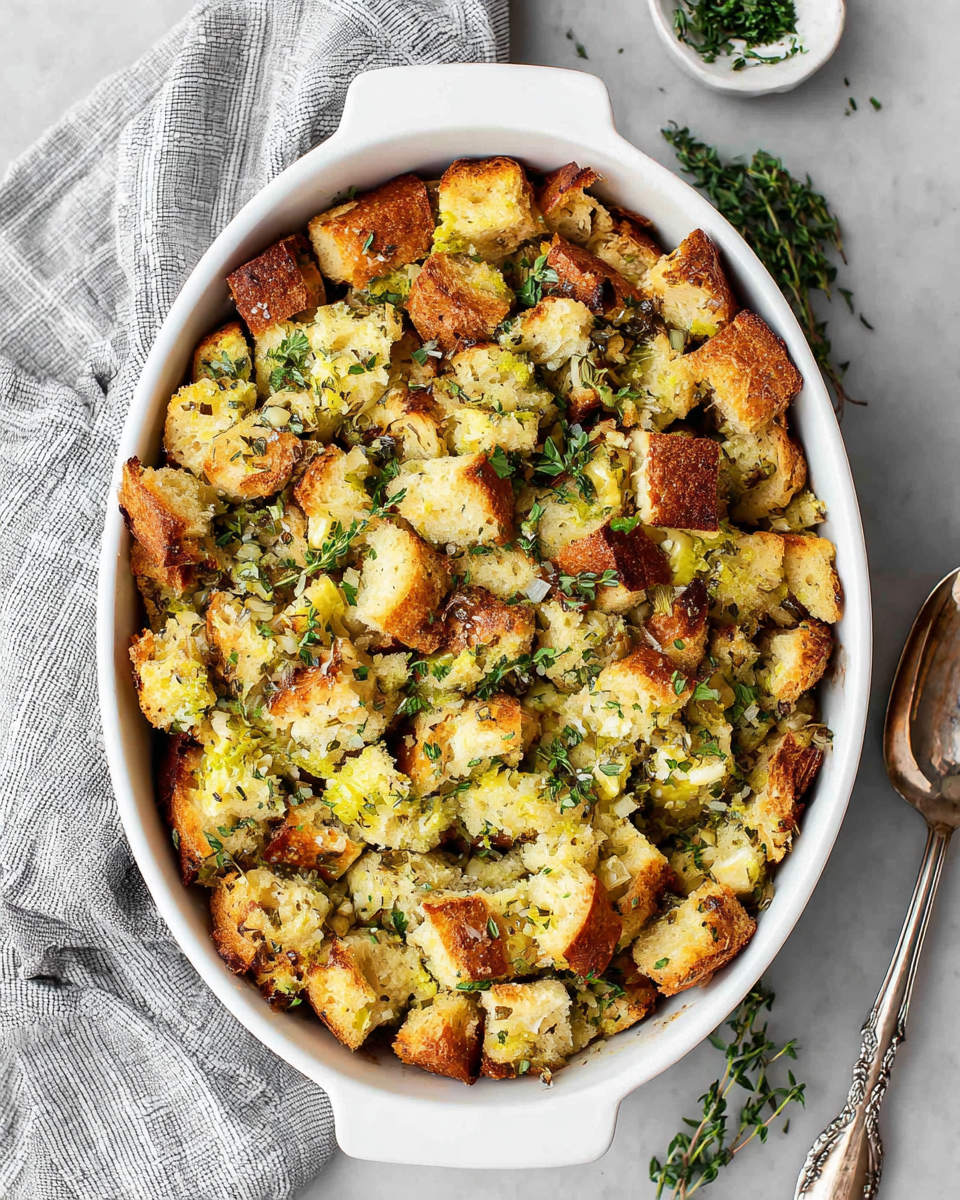
Introduction
As the holidays approach, the warmth of family gatherings and shared meals become a cherished tradition. One dish that consistently takes center stage is homemade stuffing, a versatile side that pairs beautifully with any roasted meat. The aroma of baked bread mingled with herbs and spices can evoke wonderful memories while adding a delightful touch to your holiday feast.
Creating the perfect stuffing at home allows you to customize flavors according to your family's preferences. From the choice of bread to the blend of vegetables and spices, every ingredient plays a crucial role in crafting a dish that enhances your table. In this recipe, we’ll explore how to bring together classic ingredients to create a stuffing that will impress your guests and warm hearts.
Ingredients
- 1 loaf of bread (about 1 pound, cubed)
Use a hearty bread like French or sourdough, which provides structure and absorbs flavors without disintegrating. Stale bread works best, as it holds its shape when moist. - 1 cup of butter
Butter adds richness and depth to the stuffing, helping to sauté the vegetables and giving a savory flavor. It also contributes to the golden-brown crust that many holiday diners love. - 1 large onion, chopped
Onion adds sweetness and a savory base flavor that is essential in creating a well-rounded stuffing. Its moisture will help prevent the bread from becoming too dry. - 3 celery stalks, chopped
Celery brings a crisp texture and mild herbaceous flavor, balancing the richness of the butter and providing an aromatic backbone to the stuffing. - 2 cups of chicken or vegetable broth
Broth infuses the stuffing with flavor as it hydrates the bread, making it tender and tasty. Opt for low-sodium varieties to control the seasoning. - 1 tablespoon of fresh sage, chopped (or 1 teaspoon dried)
Sage offers a warm, earthy flavor that is a hallmark of holiday stuffing. Fresh herbs brighten the dish, while dried herbs are more concentrated. - 1 tablespoon of fresh thyme, chopped (or 1 teaspoon dried)
Thyme adds a subtle yet complex flavor that enhances the stuffing without overpowering other ingredients. It pairs nicely with poultry and complements the sage well. - 1 teaspoon of salt
Salt is essential for enhancing flavors; it balances the sweetness of the vegetables and heightens the overall taste of the stuffing. - 1/2 teaspoon of black pepper
Black pepper adds a slight kick and complexity. Adjust according to your taste preference. - 1 cup of diced apples or dried cranberries (optional)
Adding apples or cranberries introduces a hint of sweetness that contrasts beautifully with the savory elements of the stuffing, creating a balanced and interesting dish.
Directions & Preparation
Step 1: Preheat your oven to 350°F (175°C).
Preheating the oven ensures that your stuffing bakes evenly and completely. This step is crucial for achieving that lovely golden-brown top that everyone enjoys.
Step 2: Cube the bread and let it dry out for a few hours or overnight.
Drying out the bread prevents it from becoming mushy during baking, maintaining its structure and creating a pleasantly chewy texture. Spread the cubes on a baking sheet and leave them at room temperature.
Step 3: In a large skillet, melt the butter over medium heat.
Melting the butter gently allows it to coat the pan and enhances the flavor of the sautéed vegetables. Keeping the heat at medium prevents burning while ensuring a thorough, even cooking of the ingredients.
Step 4: Add chopped onion and celery to the skillet and sauté until softened, about 5-7 minutes.
Sautéing the onion and celery develops caramelization and deepens their flavors, contributing to the overall taste of the stuffing. Stir frequently to prevent them from browning too much.
Step 5: Stir in the fresh herbs, salt, and pepper, cooking for an additional minute.
Adding the herbs at the end of the sauté process allows their essential oils to be released, providing intense flavor to the mixture. This step maximizes the fragrance and taste profile of your stuffing.
Step 6: In a large mixing bowl, combine the dried bread cubes with the sautéed vegetable mixture.
Combining the sautéed vegetables with the bread cubes ensures that every piece is coated with the buttery herb mixture. This is a crucial step for flavor distribution.
Step 7: Pour in the broth gradually while stirring, until the mixture is moistened but not soggy.
Adding broth gradually allows you to gauge the moisture level of your stuffing. Too little broth results in a dry dish, while too much can make it mushy, so aim for a well-hydrated mixture that still holds its structure.
Step 8: Gently fold in any optional ingredients like apples or cranberries.
Incorporating these optional elements adds a layer of flavor and texture, enhancing the rustic quality of your stuffing. Be careful not to break the bread cubes while mixing.
Step 9: Transfer the stuffing to a buttered baking dish and cover with aluminum foil.
Covering the stuffing allows it to steam and stay moist during the initial stages of baking. This helps the flavors meld together beautifully.
Step 10: Bake for about 25-30 minutes, then remove foil to brown the top for an additional 10-15 minutes.
Baking with the foil initially optimizes moisture retention, while removing it in the last stages allows for the formation of a crispy top, creating a delightful contrast of textures.

Embracing Flavorful Substitutions
While this recipe lays a solid foundation for classic stuffing, feel free to get creative! You can explore using different types of bread like cornbread or rye, which lend their unique textures and flavors. Adding vegetables such as roasted mushrooms or leeks can also deepen the umami profile. The flexibility in ingredients means you can tailor the stuffing to fit various dietary preferences or family traditions.
Pairing with Your Holiday Meal
Perfectly crafted stuffing complements an array of holiday dishes, whether it’s a savory roasted turkey or a glazed ham. The herbaceous notes of the stuffing cut through rich gravies and sauces, balancing each bite. Consider serving alongside traditional cranberry sauce to introduce a tart contrast that brightens the meal. This pairing not only enhances flavors but also adds vibrancy to the festive spread.
Tips for Achieving Perfect Texture
The texture of your stuffing is crucial for elevating the dish. A combination of crisp and moist elements provides a dynamic mouthfeel. To ensure this, bake the stuffing long enough to achieve golden-brown edges, while keeping the center moist. Additionally, consider stirring throughout the baking process to promote even browning. A well-balanced texture will keep your guests returning for seconds.
FAQs
What should I do if my stuffing comes out too dry?
If your stuffing is dry, consider drizzling additional broth over it and returning it to the oven covered to allow the bread to absorb moisture.
Can I scale this recipe up for a larger gathering?
Absolutely! Simply multiply the ingredients equally to accommodate the number of guests, but ensure to maintain the same baking time by using larger or multiple dishes.
What if my stuffing is too salty?
If your stuffing ends up too salty, adding some more bread can help absorb excess salt. Alternatively, serving it with a less salty sauce can balance the dish.
How can I enhance the flavors without adding more salt?
Try boosting flavors with additional herbs or spices such as rosemary or oregano, or incorporating zest from citrus fruits to brighten the overall profile.
What if I want a more traditional texture?
For a more traditional stuffing, consider using day-old bread that will soak up the broth better and create a dense, hearty texture.
Can I add cooked sausage for extra flavor?
Yes, adding cooked sausage not only contributes depth of flavor but also protein to the stuffing. Just ensure to adjust broth according to the moisture the sausage may add.
Conclusion
Homemade stuffing is more than just a side dish; it’s a tapestry of flavors and memories woven together. Every bite holds a piece of tradition, making it the perfect companion for your holiday meals. By following this recipe, you’ll impress your guests with a stuffing that showcases your culinary touch.
Whether served alongside a holiday roast or enjoyed as part of a cozy winter supper, your homemade stuffing is bound to make a cherished place at the table. Embrace the joy of cooking for loved ones, and savor every delicious moment you create together.
Recipe Card
Notes
Additional serving suggestions: pair with a crisp salad, garlic bread, or roasted seasonal vegetables for balance.
For make-ahead, prep components separately and assemble just before heating to preserve texture.
Taste and adjust with acid (lemon/vinegar) and salt right at the end to wake up flavors.