Introduction
As the holiday season approaches, kitchens across Italy fill with the warm scents of baking cookies, a cherished tradition that unites families. Italian Christmas cookies, known for their diversity and rich flavors, are often made to celebrate the joy and togetherness of the festive season. Each region brings its own specialties, but the heart of these recipes lies in the use of simple, quality ingredients that create memorable, festive treats.
From buttery pizzelle to crumbly ricciarelli, these cookies represent the spirit of Italian culture and cuisine. As you embark on making these delightful confections, let each batch serve as a reminder of cherished family moments and the love shared over the holiday table. Whether you choose to gift them, showcase them on your dessert table, or enjoy them with a cup of espresso, these traditional cookies are bound to bring joy.
Ingredients
- 2 cups all-purpose flour
All-purpose flour serves as the foundation of most cookie recipes, providing necessary structure. It gives the final cookies their desired texture and helps them hold their shape during baking. - 1 cup granulated sugar
Sugar not only sweetens the cookies but also aids in proper browning and flavor development. It creates a delightful balance with other ingredients, enhancing the overall taste. - 1/2 cup unsalted butter, softened
Butter adds richness and moisture to the cookies while contributing to a soft, tender crumb. The fat in butter plays a crucial role in achieving a desirable texture. - 2 large eggs
Eggs act as a binder, holding ingredients together and contributing to the leavening process. They also add moisture and richness to the final cookies. - 1 teaspoon vanilla extract
Vanilla extract enhances the overall flavor profile of the cookies, adding warmth and sweetness. It complements the other flavors in the recipe, creating a harmonious blend. - 1 teaspoon baking powder
Baking powder is a leavening agent that helps the cookies rise and achieve a light texture. It promotes even baking, resulting in a cookie that is neither dense nor overly airy. - 1/2 cup chopped nuts (optional)
Nuts add a delightful crunch and earthiness to the cookies. They also provide additional flavor dimensions, making the cookies more complex and satisfying. - Powdered sugar for dusting (optional)
Powdered sugar serves as a decorative element, providing a beautiful finishing touch. It also adds a subtle sweetness to the cookies when dusted on top.
Directions & Preparation
Step 1: Preheat the oven to 350°F (175°C).
Preheating the oven is crucial for ensuring even baking. A properly heated oven allows the cookies to rise correctly, resulting in a more uniform texture and appearance.
Step 2: In a mixing bowl, cream the softened butter and granulated sugar together until light and fluffy.
Creaming the butter and sugar introduces air into the mixture, helping the cookies rise during baking. This step also ensures the sugar dissolves fully, yielding a smooth dough.
Step 3: Add the eggs, one at a time, mixing well after each addition, then stir in the vanilla extract.
Incorporating each egg separately ensures they blend thoroughly into the batter, enhancing structure and moisture. The vanilla extract amplifies the flavor, making every bite delightful.
Step 4: In a separate bowl, whisk together the all-purpose flour and baking powder, then gradually add to the wet ingredients.
Mixing the dry ingredients separately helps distribute the baking powder evenly, preventing any pockets of leavening agent. Gradually adding the flour mixture allows for better incorporation, avoiding overmixing.
Step 5: If using, fold in the chopped nuts at this stage until just combined.
Folding in the nuts gently preserves the airiness of the dough while evenly distributing them. This step adds appealing texture and flavor to the cookies.
Step 6: Scoop dough by tablespoonfuls onto a baking sheet, leaving space between each.
Spacing the cookies on the sheet is essential to allow them to spread during baking without merging into one another. This practice helps ensure even cooking and perfect shapes.
Step 7: Bake for 10-12 minutes, or until the edges are lightly golden.
Baking the cookies until the edges are golden provides a pleasing contrast to the soft centers. Monitoring the time closely prevents overbaking, which can dry the cookies out.
Step 8: Remove the cookies from the oven and allow them to cool on a wire rack.
Cooling on a wire rack is vital for solidifying the cookie structure. It prevents steam buildup, which can make the bottoms soggy, ensuring that the cookies retain their intended texture.
Step 9: Dust with powdered sugar once completely cooled, if desired.
Dusting with powdered sugar adds an aesthetic finishing touch while introducing a subtle sweetness. This step enhances the visual appeal, making the cookies inviting and festive.

Regional Variations of Italian Christmas Cookies
Italy boasts a rich tapestry of cookie traditions that vary by region. For instance, in Northern Italy, you may find soft, spiced pandoro cookies, while southern regions often celebrate with crispy struffoli, which are deep-fried and drizzled in honey. Each region’s recipe reflects local ingredients and preferences, enriching the Italian heritage of holiday baking.
The Importance of Quality Ingredients
Using high-quality ingredients plays a critical role in the flavor and texture of Italian Christmas cookies. Organic butter, fresh eggs, and pure vanilla extract contribute to a superior taste that truly honors the tradition. It's worth the effort to source quality items, as they elevate the humble cookie into a delicious treat that becomes a part of your holiday legacy.
Creating a Cookie Exchange Tradition
Consider starting a cookie exchange with family or friends during the holiday season. This tradition not only enhances the festive spirit but also introduces you to various cookie creations from different cultures. Sharing recipes and techniques fosters community and connection, making the holiday experience richer and more memorable.
FAQs
What should I do if my cookie dough is too crumbly?
If your dough is too crumbly, try adding a small amount of milk or water, one teaspoon at a time, until it reaches a more cohesive consistency.
Can I substitute the all-purpose flour with whole wheat flour?
Yes, you can substitute all-purpose flour with whole wheat flour; however, the cookies may have a denser texture and a nuttier flavor.
What if my cookies spread too much while baking?
If your cookies spread excessively, ensure your butter isn’t too warm when you start creaming, and chill the dough for 30 minutes before baking.
How can I make sure my cookies are uniformly shaped?
Using a cookie scoop for portioning the dough ensures consistent sizes, leading to even baking and an aesthetically pleasing cookie plate.
What happens if I forget to add the baking powder?
If you forget the baking powder, your cookies will likely be denser and flatter, lacking the light texture that comes from proper leavening.
Can I replace granulated sugar with brown sugar?
Yes, you can replace granulated sugar with brown sugar, which will add a deeper flavor and a slightly different texture to the cookies.
Conclusion
Italian Christmas cookies are more than just delightful treats; they encapsulate the warmth of the holiday spirit. Each cookie carries a story and a taste of tradition, connecting generations through time-honored recipes and shared moments.
As you bake these cookies, remember that the process is about more than the final product. It's an opportunity to create memories, indulge in the joy of baking, and savor the time spent with loved ones during the holidays.
Recipe Card
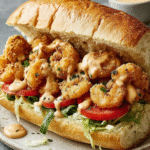
A Flavorful Take on the Classic Shrimp Po’ Boy
Ingredients
- 1 pound large shrimp peeled and deveined
- 1 cup buttermilk
- 1 cup all-purpose flour
- 1 cup cornmeal
- 1 teaspoon cayenne pepper
- 1 teaspoon paprika
- Salt and pepper to taste
- 4 hoagie rolls or French baguettes
- Lettuce shredded
- Tomato sliced
- Remoulade sauce for serving
Instructions
- Prepare the shrimp marinade.
- Combine dry ingredients for the coating.
- Heat the oil for frying.
- Coat the shrimp.
- Fry the shrimp.
- Drain and season the fried shrimp.
- Assemble the po’ boy sandwich.
- Serve immediately.
Notes
Additional serving suggestions: pair with a crisp salad, garlic bread, or roasted seasonal vegetables for balance.
For make-ahead, prep components separately and assemble just before heating to preserve texture.
Taste and adjust with acid (lemon/vinegar) and salt right at the end to wake up flavors.