Introduction
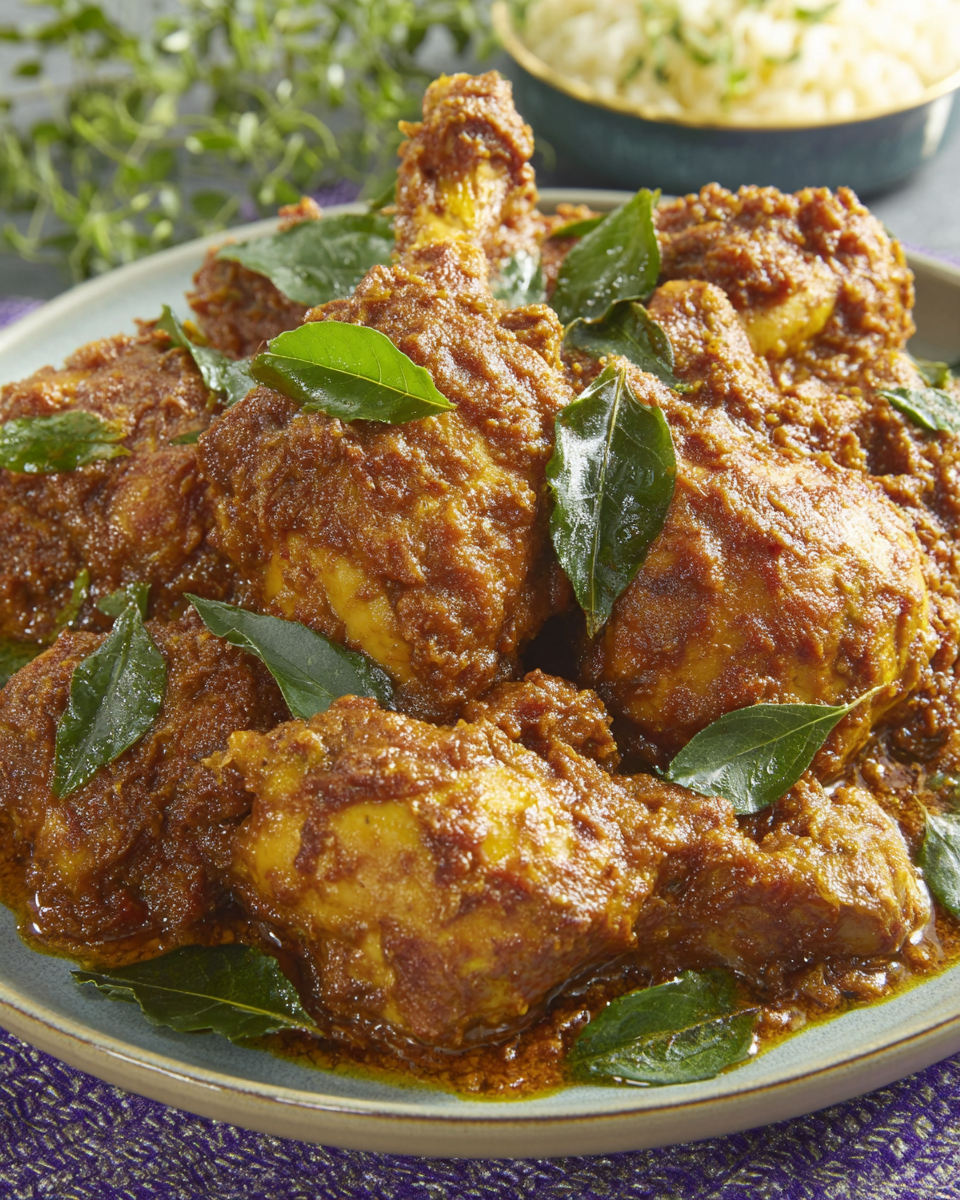
Chicken Kapitan, also known as Ayam Kapitan or Curry Kapitan, is a dish that tells the story of cultural fusion in Malaysian cuisine. With its roots in the Peranakan culture, this vibrant chicken curry is a celebration of spices, herbs, and coconut milk that creates a complex flavor profile that intrigues many home cooks and food lovers alike.
Traditionally reserved for special occasions, Chicken Kapitan has gained popularity for its enticing aroma and rich textures. Unlike other curries, its combination of spices and coconut yields a delightful, velvety sauce that perfectly coats succulent pieces of chicken. Each bite promises a journey through this unique culinary heritage, making it a worthwhile endeavor for any aspiring chef.
Ingredients
- 800g chicken thighs, bone-in, skinless
Choosing thigh meat adds both moisture and flavor, making it ideal for curries. The bones can also enhance the richness of the sauce during cooking. - 2 tablespoons vegetable oil
Oil is essential for frying the spice paste. It helps in releasing the aromatic oils from the spices, ensuring a flavorful base for the curry. - 1 large onion, finely sliced
Onions provide natural sweetness and depth to the curry. Sautéing them until golden enhances their flavor, contributing to the overall richness. - 3 cloves garlic, minced
Garlic introduces a pungent, savory note that pairs well with the spices. It adds an additional layer of flavor to the curry. - 1 thumb-sized piece ginger, grated
Ginger imparts warmth and a hint of spice, balancing the rich coconut milk and enhancing the dish's complexity. - 1 tablespoon curry powder
Curry powder is a blend of spices that brings warmth and depth. Using a good quality curry powder ensures a robust flavor is infused into the dish. - 2-3 fresh red chilies, chopped
Chilies provide the necessary heat, and varying the amount allows you to customize the spice level to your preference. - 200ml coconut milk
Coconut milk adds creaminess and sweetness, balancing the heat from the chilies and the richness of the chicken. - 1 tablespoon tamarind paste
Tamarind adds a tangy contrast to the dish, enhancing the flavor and adding a distinct, slightly sour note that is characteristic of Malay curries. - 1 tablespoon sugar
Sugar rounds out the flavors, balancing the acidity of the tamarind and the heat from the chilies, ensuring a well-rounded taste. - Salt, to taste
Salt is essential for elevating the flavors in the dish, bringing all the components together for a harmonious taste experience.
Directions & Preparation
Step 1: Prepare the chicken
Begin by trimming any excess fat from the chicken thighs and cut them into large chunks. This will allow the chicken to cook evenly and absorb more flavor from the sauce. The bone-in pieces will help keep the meat juicy during cooking.
Step 2: Heat the oil in a pot
In a large pot or Dutch oven, heat the vegetable oil over medium heat. Allowing the oil to become hot before adding the onions ensures they fry properly, giving the curry a rich foundation. It’s important to monitor the heat to avoid burning the spices later.
Step 3: Sauté the onions
Add the sliced onions to the hot oil and cook until they are translucent and beginning to caramelize. This process deepens their natural sweetness and adds complexity to the curry’s base, which is essential for a well-rounded flavor.
Step 4: Add garlic and ginger
Once the onions are ready, stir in the minced garlic and grated ginger. Cook for 1-2 minutes until fragrant, but be careful not to let them burn. This step is crucial, as the aromatics build the dish's depth.
Step 5: Incorporate spices
Add the curry powder and chopped chilies to the pot, stirring well to coat the onion mixture. Toasting the spices for a minute releases their essential oils and enhances their flavors, which will deeply infuse the chicken.
Step 6: Introduce the chicken
Add the chicken pieces to the pot, stirring them to coat with the spice mixture. Browning the chicken slightly helps develop more flavor in the finished curry and also supports the dish’s texture.
Step 7: Pour in coconut milk
Add the coconut milk to the pot and stir to combine. The rich, creamy coconut milk will form the sauce’s base, providing creaminess and sweetness that balances the other strong flavors.
Step 8: Mix in tamarind and sugar
Stir in the tamarind paste and sugar, adjusting to taste. The tamarind’s tanginess introduces a refreshing element, while sugar helps mellow out the dish, rounding off the flavors perfectly.
Step 9: Simmer the curry
Bring the mixture to a gentle simmer. This allows the chicken to cook through while the flavors meld. Simmering will produce a thick, luscious sauce; give it time to develop!
Step 10: Adjust seasoning and serve
Before serving, taste and add salt as needed. This is your chance to perfect the flavor profile. Serve the Chicken Kapitan hot, ideally with steamed rice or naan, to soak up that delicious sauce.

A Journey Through Malaysian Spices
Understanding the historical background of Chicken Kapitan helps appreciate the complex flavors it offers. The Peranakan culture, blending Chinese and Malay traditions, emphasizes the use of spices like turmeric, coriander, and curry leaves, which create a tapestry of taste that defines this dish. Each ingredient narrates the story of cultural exchange and adaptation that is pivotal to the uniqueness of Malaysian cuisine.
Perfect Pairings for Chicken Kapitan
To elevate your Chicken Kapitan experience, consider serving it alongside coconut rice or roti canai. These sides not only complement the creamy, spicy nature of the curry but also provide textural contrast. A simple cucumber salad with a dash of vinegar adds a refreshing zing, balancing the dish's richness and creating a more rounded meal.
Customizing Your Curry
One of the beauties of Chicken Kapitan is its versatility. Adjusting spice levels can cater to various palates, from mild to fiery. You can also experiment with different proteins such as shrimp or tofu, allowing this dish to cater to both meat lovers and vegetarians alike while delighting with the same flavor base.
FAQs
What if the sauce is too thick?
If your sauce is too thick for your liking, gradually add a little water or additional coconut milk until you reach the desired consistency. Stir well to incorporate.
How can I adjust the spice level of Chicken Kapitan?
To decrease heat, reduce the number of chilies used or deseed them before chopping. Conversely, for more spice, add additional chopped chilies or a dash of chili powder.
What if my chicken is not cooked through?
If your chicken is still undercooked, simply cover the pot and let it simmer a bit longer until fully cooked, ensuring you check the internal temperature.
Can I use boneless chicken?
Yes, boneless chicken thighs are a good alternative. They cook faster, so adjust your cooking time to avoid overcooking.
What other vegetables can I add?
Consider adding bell peppers or potatoes for added nutrition and texture. Just be sure to adjust cooking time accordingly.
Can I make this dish in a slow cooker?
Absolutely! Sauté the aromatics and spices first, then transfer everything to a slow cooker to develop flavors over several hours.
Conclusion
Creating Chicken Kapitan is not just about preparing a meal; it's about experiencing a piece of culinary history. With its alluring aroma and bold flavors, this dish will bring joy to your dinner table and delight your guests.
As you embrace the vibrant world of Malaysian cuisine, Chicken Kapitan serves as a perfect introduction—a dish rich in tradition and flavor that encourages exploration and connection through food.
Recipe Card

Elevate Your Lunch with a Chicken Caesar Salad Wrap
Ingredients
- 2 cups cooked chicken shredded
- 4 large romaine lettuce leaves
- ½ cup cherry tomatoes halved
- ¼ cup Parmesan cheese shredded
- ½ cup Caesar dressing
- 4 whole wheat wraps
- Salt and black pepper to taste
Instructions
- Prepare the chicken and vegetables.
- Mix chicken with dressing.
- Add vegetables and cheese to the mixture.
- Assemble the wrap.
- Slice and enjoy!
Notes
Additional serving suggestions: pair with a crisp salad, garlic bread, or roasted seasonal vegetables for balance.
For make-ahead, prep components separately and assemble just before heating to preserve texture.
Taste and adjust with acid (lemon/vinegar) and salt right at the end to wake up flavors.