Introduction
Korean Beef Bulgogi Bowls are a delightful fusion of savory flavors and textures, combining tender marinated beef with vibrant vegetables and a creamy sauce that takes the dish to another level. This recipe embraces the essence of Korean cuisine while allowing home cooks to create a restaurant-style experience in their own kitchen.
At the heart of this dish is the marinated beef, which transforms into succulent morsels, bursting with umami and sweetness. Paired with fresh ingredients and a luscious gochujang sauce, these bowls provide a satisfying meal that's both wholesome and indulgent. Perfect for family dinners or casual get-togethers, these bowls are sure to impress.
Ingredients
- 1 lb beef sirloin, thinly sliced
Beef sirloin is ideal for bulgogi due to its tenderness and flavor. Thinly slicing the beef allows it to marinate effectively and cook quickly, ensuring a juicy and flavorful result. - 1/4 cup soy sauce
Soy sauce adds a rich, salty depth to the marinade, which enhances the beef's flavor and helps tenderize it. The salty elements balance the sweetness of the other ingredients. - 2 tbsp brown sugar
Brown sugar contributes a caramelized sweetness that complements the savory notes of the soy sauce. This creates a well-rounded flavor profile essential for bulgogi. - 2 tbsp sesame oil
Sesame oil imparts a nutty aroma that is characteristic of Korean cuisine. It helps to enrich the overall taste of the dish while providing moisture. - 3 cloves garlic, minced
Garlic adds a robust, aromatic flavor that enhances the meat during marination and cooking. Its pungency contrasts beautifully with sweet and salty notes. - 1 tsp fresh ginger, grated
Ginger provides a warm, zesty touch that invigorates the dish. Its natural spiciness balances the sweetness of the other marinade components. - 1/4 tsp black pepper
Black pepper adds a mild heat and complexity to the flavor of the beef. It plays a role in elevating the overall taste without overpowering the dish. - 1 cup cooked rice
Rice serves as the base for the bulgogi bowl, providing a neutral backdrop that soaks up the flavors from the beef and sauce. It's essential for creating a complete meal. - 1 cup mixed vegetables (carrots, bell pepper, onions)
Fresh vegetables add crunch and a burst of color to the bowl. They provide essential nutrients and balance the richness of the beef and sauce. - 1/4 cup gochujang (Korean red chili paste)
Gochujang is the star of the creamy sauce, imparting a spicy, fermented flavor. It's essential for achieving that distinctive Korean taste. - 1/2 cup mayonnaise
Mayonnaise adds creaminess that balances the heat of gochujang. It mellows the flavors while enhancing the sauce's texture and richness. - 2 green onions, chopped
Chopped green onions serve as a garnish, adding freshness and a slight bite to the dish. They elevate the visual appeal and add layers of flavor. - Sesame seeds (optional)
Sesame seeds are a traditional garnish that adds a pleasant crunch and toasty flavor. They enhance the dish's presentation and authenticity.
Directions & Preparation
Step 1: Prepare the marinade by mixing soy sauce, brown sugar, sesame oil, garlic, ginger, and black pepper in a bowl.
Mixing the marinade creates a harmonious blend of flavors that will permeate the beef. Ensure all ingredients are well combined to maximize taste. This step sets the foundation for your bulgogi.
Step 2: Add the thinly sliced beef to the marinade and let it sit for at least 30 minutes, or up to overnight in the refrigerator.
Allowing the beef to soak in the marinade develops its flavor and tenderness. The acidity from the marinade breaks down the meat fibers, leading to juicy and flavorful bites.
Step 3: While the beef marinates, cook your rice according to package instructions and prepare your vegetables by slicing them into thin strips.
Cooking the rice in advance ensures that the dish comes together smoothly. Preparing the vegetables simultaneously keeps everything fresh and ensures even cooking when it's time to stir-fry.
Step 4: Heat a skillet or grill pan over medium-high heat. Once hot, add the marinated beef and cook until browned and cooked through, about 5-7 minutes.
Cooking the beef at high heat promotes a good sear, which locks in juices and creates a flavorful crust. This step is crucial for achieving the signature taste of bulgogi.
Step 5: Add the mixed vegetables to the skillet and stir-fry with the beef for an additional 3-4 minutes until they are tender but still vibrant.
Stir-frying the vegetables together with the beef allows their flavors to meld while retaining their crunch. This balance creates a more interesting texture and visual appeal in your bowls.
Step 6: In a separate bowl, combine gochujang and mayonnaise to create the creamy sauce. Whisk until smooth and well blended.
Mixing gochujang with mayonnaise creates a perfect balance of heat and creaminess. This sauce enhances the overall flavor without overshadowing the beef's rich taste.
Step 7: To assemble the bowls, place a serving of rice in each bowl, top with the beef and vegetable mixture, and drizzle with creamy gochujang sauce.
Assembling the bowls is an opportunity to present your dish appealingly. Layering the ingredients allows for a feast of flavors in every bite while maintaining a balance of textures.
Step 8: Garnish the bowls with chopped green onions and sesame seeds before serving.
Garnishing elevates the visual presentation and adds fresh flavors and textures. It makes the meal more inviting and exciting, ensuring your guests will be wowed by both taste and appearance.

The Art of Marinade: Key to Flavorful Beef
Marinades are crucial for enhancing the depth of flavor in meats, and in this recipe, the marinade does more than just season the beef. It tenderizes the meat due to the sugars and acids in the mixture, allowing it to absorb all the savory elements. The longer the beef marinates, the more robust the flavors become, making this an essential step. A well-executed marinade yields melt-in-your-mouth, flavor-packed beef.
Creamy Gochujang Sauce: A Flavor Elevation
The creamy gochujang sauce is what transforms the traditional bulgogi into a modern meal. By combining this spicy paste with mayonnaise, you create a rich and zesty topping that perfectly complements the savory, grilled beef. This sauce not only adds taste but also texture, allowing it to coat the ingredients beautifully. A drizzle of this sauce offers just the right amount of heat without overwhelming the palate.
Customizing Your Bowl: Endless Variations
One of the best aspects of bulgogi bowls is their versatility. You can easily customize your dish by swapping in your favorite vegetables or using different proteins such as chicken or tofu. Additionally, adjusting the spice level in the sauce can tailor for personal taste preferences. These bowls are perfect for exploring various ingredient combinations, ensuring you can create something new every time you make them.
FAQs
What if my beef is overcooked and tough?
If the beef is overcooked, it may become tough. To prevent this, ensure you monitor the cooking time closely and cook it just until it's no longer pink.
How can I make the sauce spicier?
To increase the heat level, add more gochujang in small increments. Taste as you go to achieve your desired spice level.
Can I substitute the beef for another protein?
Absolutely! You can use chicken, pork, or even tofu as alternatives, adjusting cooking times accordingly based on the protein chosen.
What can I do if the creamy sauce is too thick?
If the sauce is too thick, you can thin it out by adding a small amount of water or more mayonnaise until you reach your desired consistency.
How do I get my vegetables to remain crunchy?
To keep your vegetables crunchy, add them to the skillet towards the end of cooking and stir-fry them for a shorter period.
Is there a way to make this dish more colorful?
Incorporate a variety of colorful vegetables such as purple cabbage or yellow bell peppers to enhance the visual appeal and nutrition.
Conclusion
Korean Beef Bulgogi Bowls are the perfect way to enjoy a vibrant, flavorful dish packed with nutrients and joy. The combination of savory beef, crisp vegetables, and creamy sauce provides a satisfying meal for everyone at the table.
Whether you're a seasoned cook or a kitchen novice, this recipe is approachable and rewarding. Enjoy the process and don't hesitate to customize it to fit your taste—there’s no wrong way to enjoy bulgogi bowls!
Recipe Card
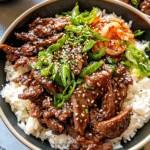
Korean Beef Bulgogi Bowls with Creamy Gochujang Sauce
Ingredients
- 1 lb beef sirloin thinly sliced
- 1/4 cup soy sauce
- 2 tbsp brown sugar
- 2 tbsp sesame oil
- 3 cloves garlic minced
- 1 tsp fresh ginger grated
- 1/4 tsp black pepper
- 1 cup cooked rice
- 1 cup mixed vegetables carrots, bell pepper, onions
- 1/4 cup gochujang Korean red chili paste
- 1/2 cup mayonnaise
- 2 green onions chopped
- Sesame seeds optional
Instructions
- Prepare the marinade by mixing soy sauce, brown sugar, sesame oil, garlic, ginger, and black pepper in a bowl.
- Add the thinly sliced beef to the marinade and let it sit for at least 30 minutes, or up to overnight in the refrigerator.
- While the beef marinates, cook your rice according to package instructions and prepare your vegetables by slicing them into thin strips.
- Heat a skillet or grill pan over medium-high heat. Once hot, add the marinated beef and cook until browned and cooked through, about 5-7 minutes.
- Add the mixed vegetables to the skillet and stir-fry with the beef for an additional 3-4 minutes until they are tender but still vibrant.
- In a separate bowl, combine gochujang and mayonnaise to create the creamy sauce. Whisk until smooth and well blended.
- To assemble the bowls, place a serving of rice in each bowl, top with the beef and vegetable mixture, and drizzle with creamy gochujang sauce.
- Garnish the bowls with chopped green onions and sesame seeds before serving.
Notes
Additional serving suggestions: pair with a crisp salad, garlic bread, or roasted seasonal vegetables for balance.
For make-ahead, prep components separately and assemble just before heating to preserve texture.
Taste and adjust with acid (lemon/vinegar) and salt right at the end to wake up flavors.