Introduction
Classic New York-Style Cheesecake is a beloved dessert that stands out for its velvety texture and rich, creamy flavor. The perfect balance between tangy cream cheese and a hint of sweetness makes this cheesecake a delightful indulgence for any occasion.
While preparing a cheesecake may seem daunting, the process is rewarding and straightforward with the right ingredients and techniques. As you aim to achieve that iconic dense and smooth consistency, every element from the crust to the filling plays a vital role in the final outcome.
In this article, we will explore the essential ingredients, preparation methods, and tips to help you create a cheesecake that rivals any bakery. Let’s dive into crafting your very own slice of New York tradition!
Ingredients
- 2 cups graham cracker crumbs
Graham cracker crumbs serve as the base for the cheesecake crust. They provide a sweet and slightly nutty flavor while also giving the crust its characteristic crumbly texture. A well-prepared crust is essential for supporting the creamy filling. - 1/2 cup unsalted butter, melted
Melted butter binds the graham cracker crumbs together, forming a sturdy crust. Using unsalted butter allows you to control the overall saltiness of the dish and enhances the dessert's flavor without overpowering the cheesecake filling. - 24 ounces cream cheese, softened
Cream cheese creates the luscious and rich filling characteristic of New York-Style Cheesecake. Its high-fat content contributes to the creamy texture, while its tangy notes add depth that balances the sweetness of the cheesecake. - 1 cup granulated sugar
Granulated sugar sweetens the cheesecake and enhances the overall flavors. It helps to achieve the desired creamy texture by allowing the cream cheese to incorporate smoothly, creating a harmonious mix. - 1 teaspoon vanilla extract
Vanilla extract adds a warm, aromatic flavor that complements the cream cheese filling beautifully. It rounds out the sweetness and adds complexity to the overall flavor profile of the cheesecake. - 4 large eggs
Eggs provide structure and stability to the cheesecake. They help set the filling as it bakes, ensuring a smooth and firm texture. Incorporating the eggs gently helps prevent overmixing, which can lead to cracks. - 1/4 cup sour cream
Sour cream enhances the cheesecake's flavor, adding a subtle tanginess that balances the sweetness. It also contributes to a creamy texture and moisture, preventing the cheesecake from becoming dry. - 1 tablespoon all-purpose flour
Flour acts as a thickening agent, helping the cheesecake maintain its shape and structure. It absorbs excess moisture during baking, ensuring that the cheesecake sets properly without becoming too dense.
Directions & Preparation
Step 1: Preheat your oven to 325°F (163°C).
Preheating your oven is essential for ensuring that your cheesecake bakes evenly. An oven at the right temperature will help set the filling properly while also giving the crust a nice golden-brown finish. Make sure to accurately set your oven temperature for the best results.
Step 2: Prepare the crust by mixing graham cracker crumbs and melted butter together.
In a mixing bowl, combine the graham cracker crumbs with the melted butter. The mixture should resemble wet sand. Ensuring that every crumb is coated in butter guarantees a more cohesive crust, which will hold together when baked and sliced.
Step 3: Press the crumb mixture into the bottom of a springform pan.
Using your fingers or a flat-bottomed measuring cup, firmly press the crumb mixture into the bottom of the pan to create an even layer. This step is crucial as it forms the base of your cheesecake and contributes to its overall structure. Be sure to compact it to prevent crumbling later on.
Step 4: Bake the crust for 10 minutes and let it cool.
Baking the crust briefly solidifies it, making it easier to handle when adding the filling. Cooling it allows for a stable base, ensuring the filling doesn't melt into a warm crust, which can affect the texture of the finished cheesecake.
Step 5: Beat the softened cream cheese and sugar until smooth.
Using an electric mixer, blend the softened cream cheese and granulated sugar until the mixture is completely smooth and free of lumps. This step ensures that the filling will have a creamy consistency, essential for a perfect cheesecake. Avoid overmixing, as that can incorporate air and lead to cracks when baking.
Step 6: Add vanilla extract and beat until combined.
Incorporating the vanilla extract at this stage infuses the filling with flavor. Mix it in just until combined to maintain a smooth texture. Enhancing the flavor profile contributes to the characteristic taste of New York-Style Cheesecake.
Step 7: Add eggs one at a time, mixing on low speed.
Adding the eggs one at a time ensures they are evenly incorporated without overmixing the batter. Mixing on low speed helps prevent air from getting trapped in the mixture, which can lead to cracks during baking. The filling should be silky and creamy without lumps.
Step 8: Stir in sour cream and flour until just combined.
By folding in the sour cream and flour gently, you add a creamy richness while preventing the filling from becoming too dense. Sour cream adds a pleasing tang, while flour provides stability. Be sure not to overmix, which can disrupt the delicate balance of textures.
Step 9: Pour the filling into the cooled crust and smooth the top.
Carefully pouring the filling into the prepared crust and using a spatula to smooth the top ensures even baking. This step is important to avoid air pockets and promote a uniform texture. Additionally, a smooth surface leads to a polished final appearance.
Step 10: Bake in the preheated oven for about 60 minutes.
Baking the cheesecake low and slow helps it set evenly without cracking. You want the outer edges to be firm, while the center remains slightly jiggly. This is an important cue that it will firm up as it cools, resulting in the signature dense texture of a classic cheesecake.
Step 11: Turn off the oven and leave the cheesecake inside for another hour.
Letting the cheesecake cool in the oven helps prevent sudden temperature changes that can lead to cracks. This gradual cooling process allows the filling to set properly while retaining moisture and flavor.
Step 12: Remove the cheesecake from the oven and refrigerate for at least 4 hours.
Chilling the cheesecake is crucial for achieving the desired texture. The cooling process allows the flavors to meld beautifully while firming up the filling into a luscious treat. For best results, refrigerate it overnight to enhance the flavor even more.
Step 13: Slice and serve your cheesecake with your favorite toppings.
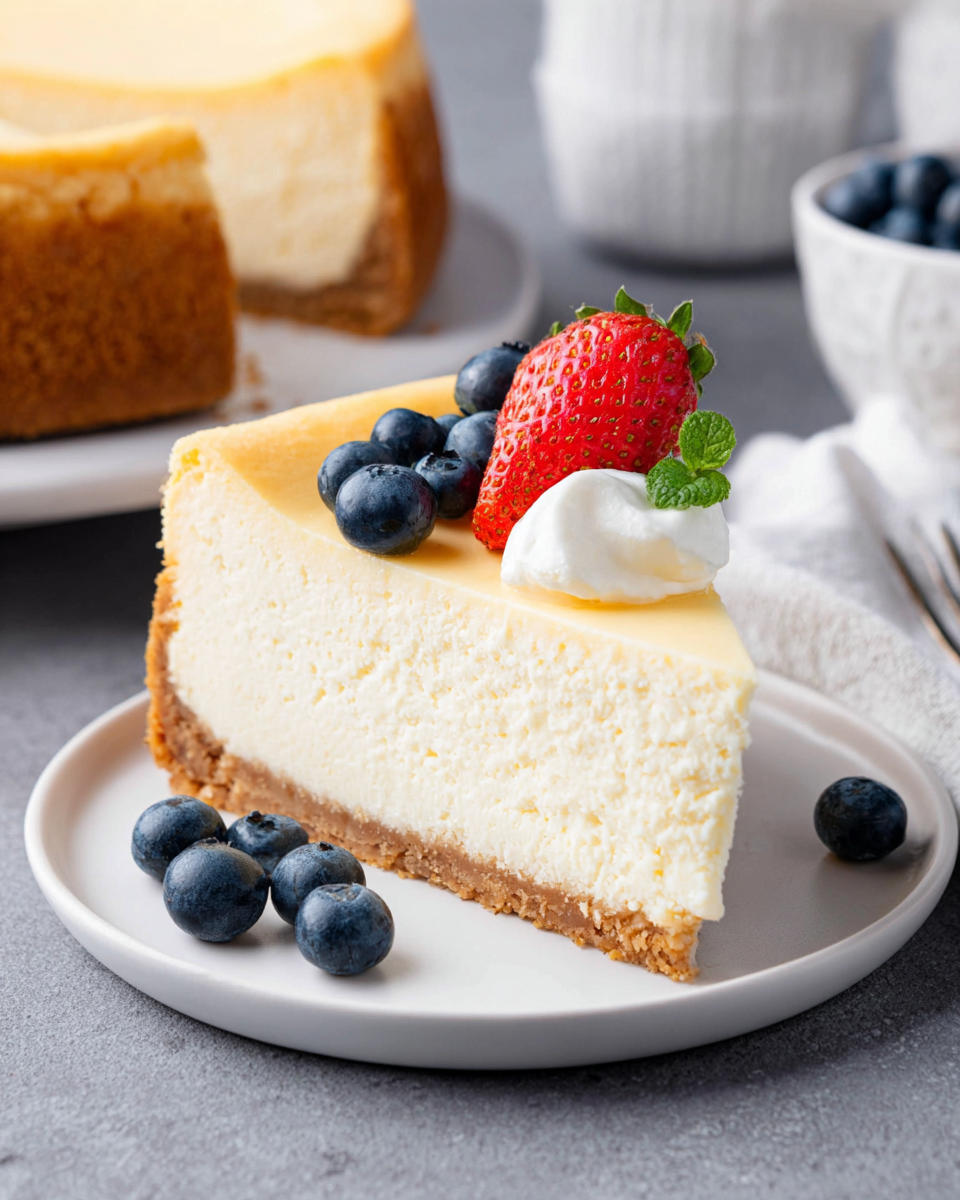
When it’s time to serve, carefully slice the cheesecake with a warm, dry knife for clean cuts. Toppings like fresh berries, chocolate sauce, or whipped cream can elevate your cheesecake experience, adding both flavor and visual appeal.

Choosing the Right Cheese for Authentic Flavor
The selection of cream cheese greatly impacts the final flavor and texture of your New York-Style Cheesecake. Opting for high-quality cream cheese ensures a rich and creamy filling. Look for brands that use fresh ingredients and have a smooth consistency. Avoid low-fat cream cheese, as it lacks the creamy depth that characterizes this classic dessert.
The Science of Baking: Preventing Cracks
A common challenge with cheesecakes is the formation of cracks on the surface. To mitigate this issue, it’s best to bake the cheesecake in a water bath. This method allows for even cooking while providing moisture to the environment, helping to prevent sudden temperature changes. Additionally, turning off the oven and letting the cheesecake cool gradually are key steps to ensure a smooth finish.
Elevating Your Cheesecake with Toppings
While a Classic New York-Style Cheesecake is delightful on its own, toppings can enhance your dessert experience. Fresh berries add a burst of flavor and color, while a drizzle of caramel or chocolate sauce provides a sweet contrast. Experiment with different toppings like nuts, fruit compotes, or whipped cream for variety that personalizes each slice.
FAQs
What should I do if my cheesecake is too dense?
If your cheesecake turns out too dense, consider incorporating more sour cream or reducing the mixing time when adding eggs. This can help create a lighter texture.
Can I use flavored cream cheese in my recipe?
Yes, flavored cream cheese can be an exciting twist! Just keep in mind that it may alter the flavor balance, so adjust your sugar accordingly.
How can I prevent my cheesecake from puffing up while baking?
To prevent puffing, keep your mixer speed low when incorporating the eggs and mix just until combined. This helps avoid incorporating too much air into the batter.
What to do if my filling seems lumpy?
If your filling appears lumpy, ensure your cream cheese is at room temperature before mixing. If it’s too cold, it can form clumps, leading to an uneven texture.
Can I make this cheesecake in a different pan size?
Yes, you can adjust the baking time and ingredient quantities based on your pan size. A larger pan will require less time, while a smaller pan may need longer to set.
What is the best way to serve my cheesecake?
For serving, slice the cheesecake with a warm knife for clean cuts and consider topping it with fresh fruit, chocolate sauce, or a dollop of whipped cream for added flavor.
Conclusion
Creating a Classic New York-Style Cheesecake at home is a rewarding venture that yields a truly memorable dessert. By following these steps and understanding the role of each ingredient, you can master the art of baking this iconic cheesecake.
Whether you’re serving it at a special occasion or simply treating yourself, this cheesecake will undoubtedly impress. Take your time, enjoy the process, and savor each creamy, delectable bite!
Recipe Card

Butternut Squash Pasta with Sausage and Spinach for Fall
Ingredients
- 12 ounces of pasta
- 1 medium butternut squash peeled and cubed
- 1 pound of Italian sausage sweet or spicy
- 3 cups fresh spinach
- 1 onion diced
- 3 cloves of garlic minced
- 3 tablespoons olive oil
- 1 teaspoon dried thyme
- Salt and pepper to taste
- 1/2 cup grated Parmesan cheese
Instructions
- Cook the pasta according to package instructions until al dente.
- In a large skillet, heat olive oil over medium heat and sauté the onion until translucent.
- Add minced garlic and Italian sausage to the skillet, breaking it apart, and cook until browned.
- Stir in the butternut squash and thyme, cooking until the squash begins to soften.
- Add fresh spinach and a splash of reserved pasta water, then stir until the spinach wilts.
- Combine the cooked pasta with the sauce, tossing everything together thoroughly.
- Finish with grated Parmesan cheese and serve hot, garnished with extra herbs if desired.
Notes
Additional serving suggestions: pair with a crisp salad, garlic bread, or roasted seasonal vegetables for balance.
For make-ahead, prep components separately and assemble just before heating to preserve texture.
Taste and adjust with acid (lemon/vinegar) and salt right at the end to wake up flavors.