Introduction
At the heart of every Thanksgiving meal lies a dish that warms our souls: stuffing. This classic dish, often lovingly prepared by grandmothers, is a comforting blend of flavors and textures that brings family together around the dinner table. Whether it’s baked inside the turkey or served as a delightful side, Grandma's stuffing is a testament to cherished traditions and timeless cooking methods.
With its perfect balance of herbs, bread, and secret ingredients that vary from family to family, stuffing becomes more than just a side dish; it’s a vessel of memories, soaked in nostalgia. Here's your chance to recreate this deeply satisfying recipe and impress your guests with each savory bite.
Ingredients
- 1 loaf of stale white bread (about 12 cups, cubed)
Stale bread is essential as it absorbs the moist ingredients without becoming too mushy, providing the right texture for stuffing. - 1 cup unsalted butter
Butter adds richness and depth of flavor, helping to sauté vegetables and providing a base for the seasoning. - 2 cups chopped onions
Onions bring sweetness and a savory note to the stuffing, caramelizing beautifully to enhance the overall flavor profile. - 1 cup chopped celery
Celery contributes a satisfying crunch and earthy flavor, balancing the softness of the bread. - 2 teaspoons dried sage
Sage is the star herb in stuffing, providing a distinctive, aromatic flavor that pairs wonderfully with poultry. - 1 teaspoon dried thyme
Thyme adds an herbaceous note to the dish, enhancing its complexity and complementing the other ingredients. - 1 teaspoon salt
Salt is crucial for seasoning the stuffing evenly, enhancing the flavors of the bread and vegetables. - 1/2 teaspoon black pepper
Black pepper adds a subtle warmth and depth, sharpening the flavors without overpowering the dish. - 2 to 3 cups chicken or vegetable broth
Broth moistens the stuffing, helping it to bind together while infusing it with savory flavor. - 1/2 cup chopped fresh parsley (optional)
Fresh parsley adds a bright, herbal touch and color, making the dish appealing and fresh.
Directions & Preparation
Step 1: Preheat your oven to 350°F (175°C).
Preheating is vital to ensure even cooking. An adequately heated oven allows the stuffing to cook through properly and achieve that golden, crispy top.
Step 2: Cube the stale bread and spread it on a baking sheet.
Cubing the bread and toasting it in the oven for about 10 minutes helps to dry it out further, which is perfect for ideal absorption of the broth later.
Step 3: In a large skillet, melt the butter over medium heat. Add onions and celery, cooking until softened (about 5–7 minutes).
Sautéing the onions and celery in butter releases their natural sugars, creating a delicious base for your stuffing. Make sure to stir occasionally to prevent browning.
Step 4: Add sage, thyme, salt, and pepper to the skillet, cooking for another minute until fragrant.
Cooking the herbs releases their essential oils, intensifying the flavor and ensuring that the stuffing is well seasoned throughout.
Step 5: In a large mixing bowl, combine the toasted bread cubes with the sautéed vegetable mixture.
Mixing the bread and vegetables allows for even distribution of flavors. Use your hands to break up any large chunks of bread while maintaining a chunky texture.
Step 6: Gradually add the broth, stirring until the bread is evenly moist but not soggy.
This step is key for achieving the right stuffing texture. Too little broth will yield a dry stuffing, while too much will make it mushy. Aim for a moist consistency.
Step 7: Fold in the fresh parsley if using, mixing gently to incorporate.
Fresh parsley not only adds flavor but also a vibrant color to your stuffing, enhancing its presentation. Be gentle to retain the structure of the bread.
Step 8: Transfer the stuffing to a greased baking dish, spreading it out evenly.
Evenly distributing the stuffing in the baking dish ensures consistent cooking. A slightly spread out layer allows for a crispier top.
Step 9: Cover the dish with aluminum foil and bake for 30 minutes. Remove the foil and bake for an additional 15-20 minutes until the top is golden brown.
Covering the dish initially helps to steam the stuffing, ensuring it cooks all the way through. Removing the foil towards the end promotes browning, resulting in a delightful crust.
Step 10: Let the stuffing sit for 10 minutes before serving.
Allowing the stuffing to rest enhances its flavors and makes it easier to serve. The resting time lets it firm up slightly, making it perfect for scooping.

The Heart of Home Cooking: Why We Stuff
Stuffing is often seen as a humble dish, but its significance runs deeper than its ingredients. Traditionally, it makes use of leftover bread and pantry staples, reflecting a resourceful cooking approach. With roots in different cultures, stuffing is a reminder of how cooking brings families together, embodying warmth and hospitality—a true cornerstone of any Thanksgiving feast.
Secrets to Flavorful Stuffing
The secret to unforgettable stuffing often lies in the balance of flavors and textures. Fresh herbs, like sage and parsley, bring brightness, while sautéed vegetables offer a tactile contrast to the bread. Using quality broth rather than just plain water greatly enhances flavor, ensuring each bite is rich and savory. Experimenting with spices and adding personal touches can elevate a traditional recipe.
Customizing Your Grandma's Recipe
While Grandma's recipe may be a cherished tradition, everyone has the right to put their spin on it. Consider adding diced apples for sweetness, chestnuts for a nutty crunch, or even sausage for hearty depth. Each addition can tell a story of your family's journey while paying homage to time-honored recipes that have brought joy to tables through the generations.
FAQs
What can I do if my stuffing turns out too dry?
If your stuffing is dry, adding more broth gradually can help. Pour it over the top and gently mix until it reaches your desired moistness.
Can I make stuffing without using broth?
Yes, you can use vegetable or chicken stock as a flavorful substitute or even water in a pinch, but the flavor impact may not be as pronounced.
What if I want to add meat, like sausage, to the stuffing?
You can sauté ground sausage in the skillet before adding the onions and celery. Just ensure it is cooked through before mixing in with the bread.
How can I adjust the stuffing for a gluten-free diet?
Choose gluten-free bread options and ensure that the broth you use is also gluten-free. The texture will be slightly different but still delicious.
Is it possible to adjust the herbs in this recipe?
Definitely! You can try different herbs such as rosemary or oregano to change the flavor profile and create a new twist on the traditional stuffing.
How much can I scale the recipe?
You can easily double or halve the ingredients based on the number of guests. Just ensure your baking dish is the correct size to accommodate the scaling.
Conclusion
Grandma's classic Thanksgiving stuffing embodies the spirit of the holiday—a time for sharing, gratitude, and love through food. Each ingredient tells a story, each texture brings you back to simpler times while creating new memories with loved ones.
As you gather around your dinner table this Thanksgiving, allow this stuffing to be more than just a dish; let it be a reminder of family traditions, flavors, and the joy of togetherness. Happy cooking!
Recipe Card
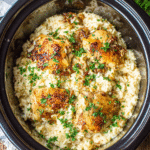
Comforting Crockpot Chicken and Rice Recipe
Ingredients
- 4 boneless skinless chicken breasts
- 1 cup long grain white rice
- 4 cups chicken broth
- 1 cup diced onions
- 2 cloves garlic minced
- 1 teaspoon dried thyme
- 1 teaspoon paprika
- Salt and pepper to taste
- 1 cup frozen peas and carrots
Instructions
- Prepare the crockpot.
- Add the chicken breasts.
- Mix in the rice.
- Add the vegetables and seasonings.
- Pour in the chicken broth.
- Season with salt and pepper.
- Cover and cook on low.
- Add the frozen peas and carrots during the last 30 minutes.
- Shred the chicken and serve.
Notes
Additional serving suggestions: pair with a crisp salad, garlic bread, or roasted seasonal vegetables for balance.
For make-ahead, prep components separately and assemble just before heating to preserve texture.
Taste and adjust with acid (lemon/vinegar) and salt right at the end to wake up flavors.