Introduction
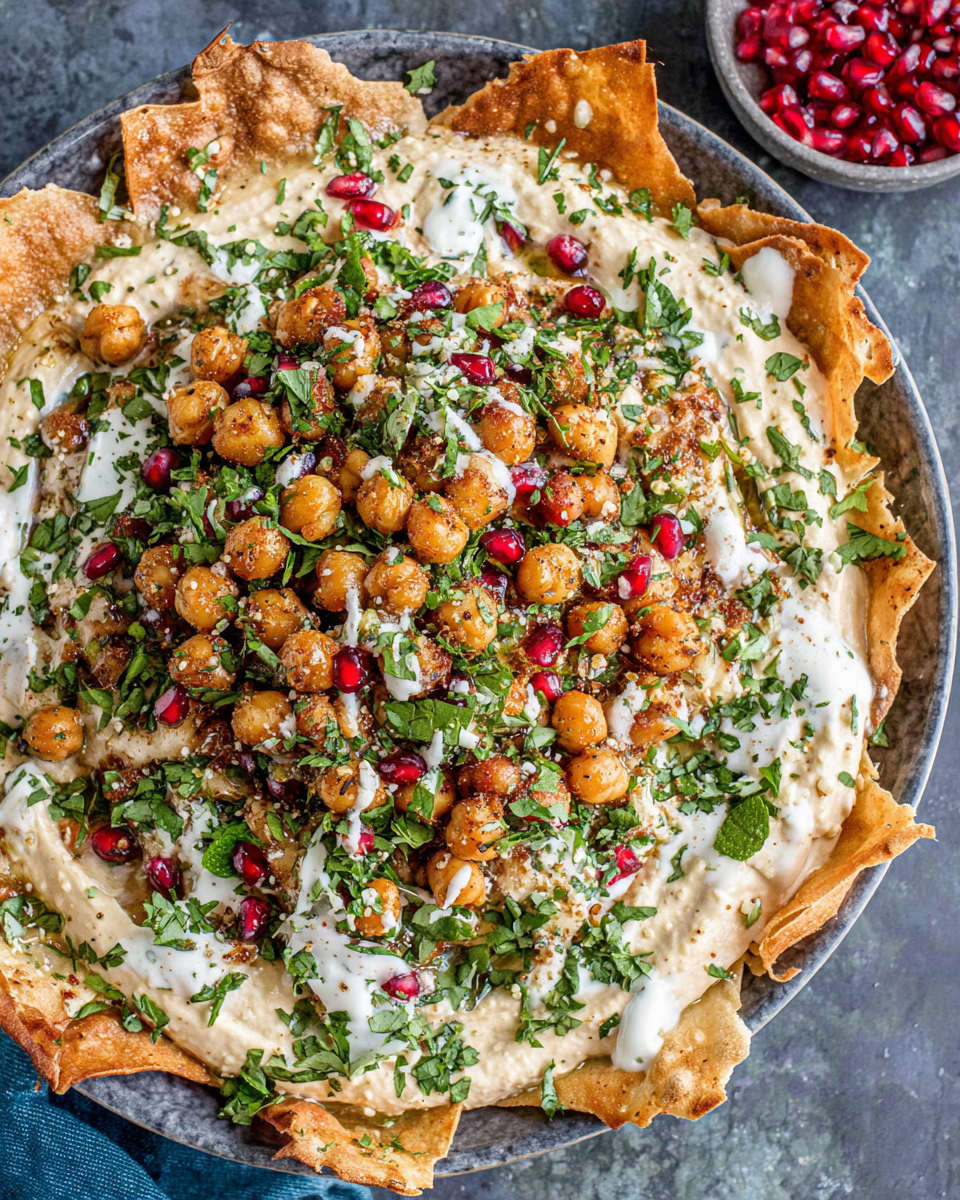
Fatteh is a vibrant Middle Eastern dish that brings together textures and flavors in a delightful way. At its core, it features crispy pita bread, creamy hummus, and tangy yogurt, transformed into a hearty and satisfying meal. This dish also serves as an excellent showcase for spices and garnishes, offering endless possibilities for customization.
Originating from Levantine cuisine, Fatteh is often enjoyed during gatherings and celebrations. It's a dish that encourages sharing, making it perfect for family dinners or casual get-togethers. With its layered components, Fatteh is not only delicious but also visually appealing, inviting everyone to dig in.
Ingredients
- 4 large pita breads
Pita bread serves as the base for Fatteh, providing a crispy contrast to the creamy elements. When toasted or fried, it becomes a delightful crunch that complements the other ingredients. - 1 ½ cups hummus
Hummus adds richness and a velvety texture to the dish. Made from blended chickpeas, tahini, and garlic, it offers a nutty flavor that balances well with the tangy yogurt. - 2 cups plain yogurt
Yogurt contributes a refreshing and tart element, enriching the overall flavor profile. It also provides a creamy contrast to the crispy pita and the dense hummus layer. - 1 teaspoon ground cumin
Cumin enhances the flavor of Fatteh with its earthy warmth, adding depth to the dish. It is a key spice in Middle Eastern cuisine, bringing aromatic notes that elevate the overall taste. - ¼ cup pine nuts, toasted
Toasted pine nuts offer a nutty crunch and a luxurious touch, enhancing the visual and textural appeal of the dish. They provide a delightful contrast to the creamy and crispy components. - ¼ cup chopped fresh parsley
Fresh parsley adds a burst of color and a hint of freshness to Fatteh. Its bright flavor balances the richness of the other ingredients and makes the dish more vibrant. - Olive oil for drizzling
A drizzle of olive oil enriches the flavors and adds a lovely sheen to the dish. It's a traditional ingredient in many Middle Eastern recipes, imparting a fruity note. - Salt and pepper to taste
Seasoning is essential to enhance the flavors of each layer. Salt helps to draw out the natural tastes of the ingredients, while pepper adds a slight kick.
Directions & Preparation
Step 1: Toast the pita bread until golden and crisp.
Start by preheating your oven to 375°F (190°C). Cut the pita bread into triangles and spread them on a baking sheet. Toasting the pita ensures that it becomes a crunchy base for the Fatteh, providing contrast to the creamy layers. Bake for about 10 minutes, or until golden brown, keeping an eye on them to prevent burning.
Step 2: Prepare the hummus layer by smoothing it onto the base.
Once your pita pieces are ready, spread the hummus evenly over the toasted pita. This layer not only adds creaminess but also serves as glue, holding the rest of the ingredients together. Ensure the hummus reaches the edges for maximum flavor in every bite.
Step 3: Spread the yogurt evenly over the hummus.
Next, layer the plain yogurt over the hummus. This adds a cooling element that nicely balances the dish's richness. Aim for a smooth, even layer—this will help the flavors meld together beautifully as you eat.
Step 4: Season with cumin, salt, and pepper.
Sprinkle ground cumin, salt, and pepper over the yogurt layer. This step is crucial for building flavor; the spices will enhance the overall taste profile of the Fatteh. Feel free to adjust the seasoning to your liking—it's all about creating a balance that suits your palate.
Step 5: Top with toasted pine nuts and parsley.
Next, scatter the toasted pine nuts and chopped parsley over the top. This adds a delightful crunch and a fresh element, brightening up the dish visually and flavor-wise. The pine nuts will also lend a rich nuttiness, complementing the other layers.
Step 6: Drizzle with olive oil before serving.
Finish off your Fatteh with a generous drizzle of olive oil. This not only adds richness and a silky texture but also enhances the presentation. Just before serving, take a moment to admire your creation—it’s a feast for the eyes as much as it is for the palate.
Step 7: Serve immediately and enjoy!
Fatteh is best enjoyed fresh, allowing the crispiness of the pita to shine. Gather around the table with family or friends, and encourage everyone to dig in. As you savor the layers of flavor, feel free to share your interpretations, as this dish is all about personalization.

The Versatile World of Fatteh Variations
Fatteh is a dish that welcomes creativity and regional spins. While the classic version features hummus, yogurt, and pita, variations abound! In some regions, you'll find Fatteh embellished with spiced meats or chickpeas, while others may include roasted vegetables. This adaptability makes it a fantastic dish to experiment with, fitting any occasion or taste.
Choosing the Right Spices for Depth
The spices you choose can elevate your Fatteh experience tremendously. While cumin is traditional, you can explore options like paprika or sumac for different flavor profiles. A pinch of cinnamon could also add warmth without overwhelming the dish, allowing the other flavors to shine.
Perfect Pairings with Fatteh
Fatteh is often served alongside side dishes or appetizers that complement its flavors. Consider pairing it with tabbouleh salad or stuffed grape leaves for an authentic experience. Hummus or baba ghanoush on the side can also add to the platter and enhance your meal further, creating a wonderful spread.
FAQs
What if my hummus seems too thick?
If your hummus consistency is too thick, adding a little water or olive oil can help smooth it out. Blend until you reach your desired creaminess.
How can I adjust the flavor if my spices are too strong?
If the spices seem overpowering, try balancing them with additional yogurt or hummus. This can mellow out the flavors and create a more harmonious dish.
What if my toasted pine nuts burn?
If you notice the pine nuts are burning, quickly remove them from the heat and transfer them to a cool surface. The residual heat can continue to cook them, so monitor closely.
Can I add more protein to Fatteh for a heartier dish?
Yes, adding grilled chicken or sautéed beef can make Fatteh a more substantial meal. Just ensure it’s cut into small pieces for easy layering.
What variations can I try for the beans layer?
You can substitute chickpeas with lentils or add white beans for different textures and flavors, creating a unique twist to your Fatteh.
What if I want to serve Fatteh as individual portions?
To serve in individual portions, layer the ingredients in small bowls or ramekins instead of a large platter. This allows for personal customization.
Conclusion
Fatteh is a testament to the beauty of Middle Eastern cuisine, showcasing how simple ingredients can create something spectacular. With its layers of flavor and customizability, it offers every cook a canvas to express creativity.
As you embark on making your own Fatteh, don't hesitate to adjust the flavors and ingredients to suit your taste. Whether enjoyed as a main course or shared as an appetizer, Fatteh is sure to be a hit at any gathering.
Recipe Card
Classic Christmas Roast Turkey with Herb Butter and Gravy
Ingredients
- 1 12-14 lb whole turkey
- 1 cup unsalted butter softened
- 2 tablespoons fresh rosemary chopped
- 2 tablespoons fresh thyme chopped
- 2 tablespoons fresh sage chopped
- 4 cloves garlic minced
- Salt and freshly ground black pepper to taste
- 1 onion quartered
- 1 orange quartered
- 3 cups low-sodium chicken broth
- 3 tablespoons all-purpose flour
Instructions
- Thaw the turkey if frozen.
- Preheat the oven to 325°F (165°C).
- Prepare the herb butter mixture.
- Pat the turkey dry and season inside and out.
- Rub the herb butter under the skin and all over the turkey.
- Stuff the cavity with onion and orange quarters.
- Truss the turkey and place it on a roasting rack.
- Roast the turkey for approximately 3–4 hours.
- Remove the turkey and let it rest.
- Make the gravy using the drippings.
Notes
Additional serving suggestions: pair with a crisp salad, garlic bread, or roasted seasonal vegetables for balance.
For make-ahead, prep components separately and assemble just before heating to preserve texture.
Taste and adjust with acid (lemon/vinegar) and salt right at the end to wake up flavors.